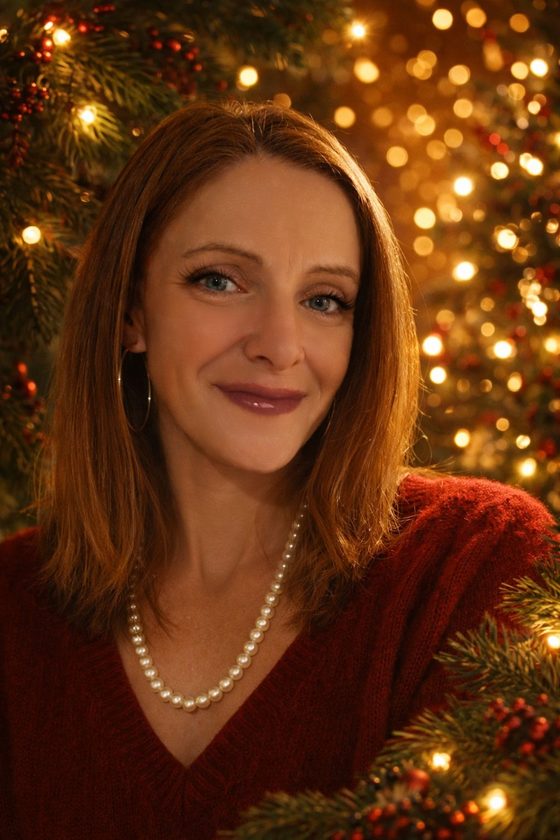
Melissa Reid
From Survivor to Builder
"I've fallen through every crack this city has. Now I know exactly where to stand guard."
Melissa Reid learned early that when systems fail, someone has to step up. She became that someone at twelve, the day her father died.
She stayed that someone through a family tragedy in 2007. Through twenty years of in-and-out addiction. Through every gap in Kingston's safety net there is to fall through.
In October 2014, her son was diagnosed with leukemia. He was six years old. Five months later, her daughter was born eleven weeks premature. Both children were born with Osteogenesis Imperfecta, a rare and serious genetic bone condition.
OHIP does not cover outpatient chemotherapy medication. Her six-year-old's chemo ran about $500 a month, out of pocket. And once a child has a cancer diagnosis, life insurance and private coverage are gone too — there was no fallback. Some months the choice was his medication or the rent. A child's chemotherapy should be covered in this country. When she reached out to the City for support, she wasn't met with a safety net or a strategy. She was told to "figure it out."
So she figured it out. For the next seven years, Melissa lived in oncology wards. Not as a parent watching from the bedside — as a full-time medical advocate fighting specialists, navigating systems, locking down treatment plans. Her daughter's care plan exists because she built it. She secured both children's enrolment in Ontario's Cleft Lip and Palate Program — $40,000 in coverage that activates for each of them at eighteen.
She did this through COVID-19, which isolated her family in medical wards while the world fell apart. She did it while supporting a partner in active addiction. She did it while in active addiction herself.
In 2021, her partner was found unresponsive in police custody.
That was the moment she stopped. Completely. February 10, 2021 — she has not used since.
She doesn't talk about those years to inspire pity. She talks about them because they taught her exactly where the cracks are — and who falls through them. So she went to work on the next problem.
For three and a half years, she stayed isolated and studied, building on her background in Medical and Office Administration. She earned certifications in Program Evaluation for the Homelessness Sector; Data Collection for Homeless Services; Low-Barrier, Gender-Focused Housing Approaches; Harm Reduction & Overdose Response; and Trauma-Informed Outreach. She didn't just want to help. She wanted to prove, with data, exactly what works and what doesn't.
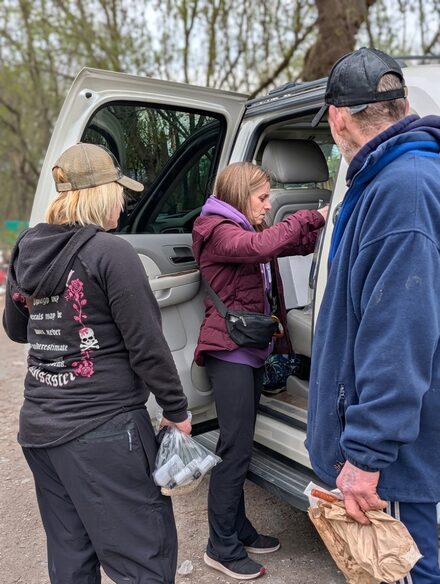 In February 2025, she founded Peer Outreach Empowerment Team Alliance Inc. (POET), and she runs it from Belle Park. She cofounded Kingston Food Rescue, which delivers meals to the same site. POET runs the Winter Initiative: when the temperature drops to -15°C or colder, volunteers fan out across Kingston by vehicle at 7:00 a.m. and 7:00 p.m. Thirty-eight people have taken a shift since it started. When it hits -18°C or below, they do not leave. Three four-hour shifts on-site, 8:00 p.m. to 8:00 a.m., until morning. A four-person core team handles hospitalization advocacy, system navigation, and the deeper outreach work.
Her approach is consistent: no drama, no delays. The system works because she built it to work. She calls herself a systems architect — someone who designs the logistics that close the gap between services and the people who need them.
Today, her son is a survivor. Her daughter is well. Melissa runs POET. She is in her fifth year of sobriety. She lives in Kingston with her daughter.